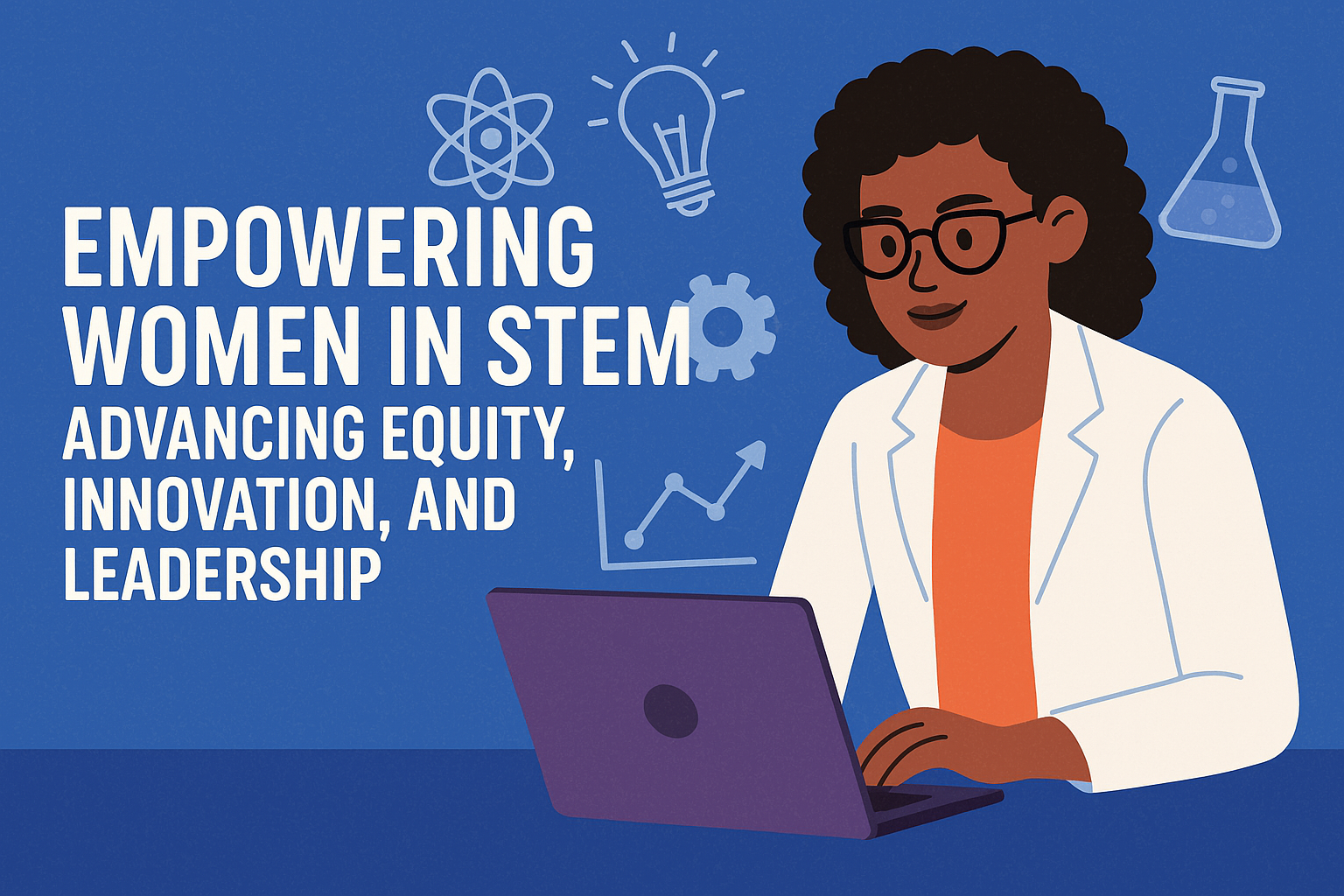
As International Women’s Month comes to a close, we want to take a moment to celebrate the women who have shaped and continue to drive Global Advantage’s success. Women in STEM science, technology, engineering, and mathematics have played a pivotal role in advancing innovation, solving complex global challenges, and shaping industries that define our future. Yet, despite their contributions, women remain underrepresented in many STEM fields, particularly in leadership and technical roles.
At Global Advantage, we’re proud to be a company that champions women in STEM, maintaining a minimum 50% women-owned and C-suite-led business. Supporting and empowering women in these fields isn’t just about equity; it’s about ensuring the brightest minds, regardless of gender, have the opportunity to lead, create, and innovate.
This month, we’re highlighting the progress women have made in STEM across Canada, the barriers that persist, and why breaking these barriers matters not just for women, but for the future of science, technology, and innovation.
Progress in Motion: How Women Are Gaining Ground in STEM
The last decade has seen major strides in women’s representation in STEM. In 2021, women aged 25 to 34 made up 34% of all STEM postsecondary qualification holders, a number that continues to rise.[1] Fields like biological sciences and general sciences have near-equal representation, with women making up 60% and 58% of students, respectively.[2]
More women are also stepping into leadership roles and launching businesses in STEM. Government initiatives, private sector programs, and advocacy efforts are helping create more inclusive, supportive workplaces for women and gender-diverse individuals in science and tech.[3]
From Education to Employment: Why the STEM Gender Gap Persists
Despite this progress, gaps remain especially in engineering and computer science, where women still account for less than 20% of students.[4] Although more women are earning STEM degrees, transitioning into the workforce isn’t always seamless. In 2011, the unemployment rate for women aged 25 to 34 with a STEM university degree was 7.0%, compared to 5.7% for those with a non-STEM degree.
Several factors contribute to this such as, many women may struggle to secure roles in their fields due to hiring biases, limited professional networks, or a lack of visible role models in leadership positions. These barriers can make it harder to break into the industry, even with the right qualifications.
Retention is also a concern. Women in STEM frequently face slower career progression, pay gaps, and higher turnover rates.[5] Many eventually leave STEM careers altogether, citing workplace climate, limited advancement opportunities, and challenges balancing work and personal responsibilities.
Beyond the Momentum: What’s Next for Women in STEM?
The momentum is here. More women than ever are pursuing STEM degrees, breaking barriers, and redefining what leadership looks like in science, technology, engineering, and mathematics. But progress doesn’t stop at education; true change happens when these women have the support, resources, and opportunities to build long-term, successful careers in their fields.
With continued investment in mentorship, education, and workplace policies that promote diversity and inclusion, we can create environments where women not only enter STEM fields but thrive in them. This means fostering strong mentorship networks, expanding access to leadership opportunities, and ensuring that workplace policies such as flexible work arrangements, equitable pay structures, and family-friendly benefits support career growth at every stage.
As we wrap up International Women’s Month, let’s not only reflect on how far we’ve come but also recognize the work still ahead. Change happens when we commit to lifting each other up through advocacy, action, and allyship. By investing in the next generation of women and girls in STEM, we’re building a future where innovation thrives, talent is recognized regardless of gender, and opportunity is truly equal for all.
[1] https://www.canada.ca/en/women-gender-equality/funding/equality-action/inclusive-stem-future.html?
[2] https://www150.statcan.gc.ca/n1/pub/36-28-0001/2021011/article/00004-eng.htm
[3] https://www.canada.ca/en/women-gender-equality/funding/equality-action/inclusive-stem-future.html
[4] https://www150.statcan.gc.ca/n1/pub/36-28-0001/2021011/article/00004-eng.htm
[5] https://pmc.ncbi.nlm.nih.gov/articles/PMC4279242